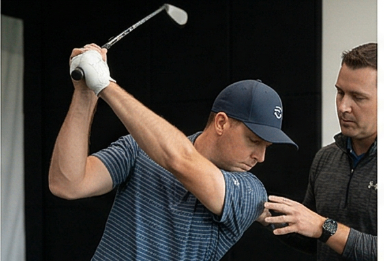
Wrist Structure in the Backswing and Clubface Control

Why is wrist structure important in the backswing?
Wrist structure in the backswing helps organize the clubface, control club position at the top, and simplify the downswing. If the wrists are unstable early, the golfer often has to make last-second compensations later.
At ATX Golf Performance in Austin, we often see golfers working hard on rotation and path while missing a more important issue: how the wrists set the club.
What is wrist structure in golf?
Wrist structure refers to how the lead wrist, trail wrist, and forearms organize the club during the backswing.
Good wrist structure usually helps:
- Keep the clubface more stable
- Put the club in a predictable position at the top
- Reduce the need for timing-based corrections
- Improve strike and start-line consistency
Common wrist structure problems
Many golfers arrive at the top with:
- A cupped lead wrist
- Excessive early forearm roll
- A clubface that is too open or too shut
- Poor awareness of where the club actually is
This creates problems before the downswing even starts.
How wrist structure affects clubface control
1. It influences clubface position at the top
If the face is too open at the top, the golfer often has to close it late. That usually leads to timing-based ball flight.
2. It affects downswing path
Poor wrist conditions often force compensations such as:
- Coming over the top
- Dropping the club too far behind
- Stalling rotation to save the strike
3. It changes strike quality
When the wrists organize the club well, low point and face contact tend to become more predictable.
What better wrist structure feels like
Helpful feels for many golfers include:
- A flatter lead wrist
- A more controlled clubface
- A gradual set rather than a sudden one
- Less loose or unstable feeling at the top
How to improve wrist structure in the backswing
1. Let the club set naturally
Avoid forcing the hinge too early. Let the wrists respond to the motion of the arms and torso.
2. Use slow-motion rehearsals
Pause at the top and check where the clubface and wrists are.
3. Match the wrists to body motion
The wrists should not work independently. They should organize the club in response to body rotation and arm swing.
4. Prioritize control over manipulation
The goal is not to flip or hold positions. It is to create a repeatable structure.
Book your evaluation and build a swing you can trust
Learn More →Frequently Asked Questions
Why is wrist structure important in the backswing?
It organizes the clubface early, puts the club in a predictable position at the top, and reduces the need for timing-based compensations in the downswing.
What does a cupped lead wrist cause?
A cupped lead wrist often opens the clubface at the top, forcing the golfer to make last-second corrections that lead to inconsistent ball flight and start lines.
How do you improve wrist structure in golf?
Let the club set naturally with the body, use slow-motion rehearsals to build awareness, and focus on repeatable structure rather than forced positions.