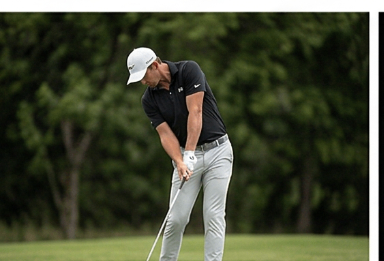
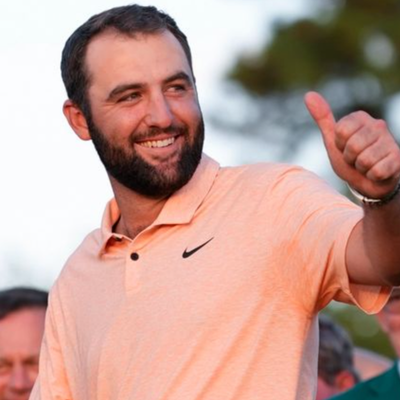
Scottie Scheffler's Superpower: Why Feel Beats Thinking in the Golf Swing
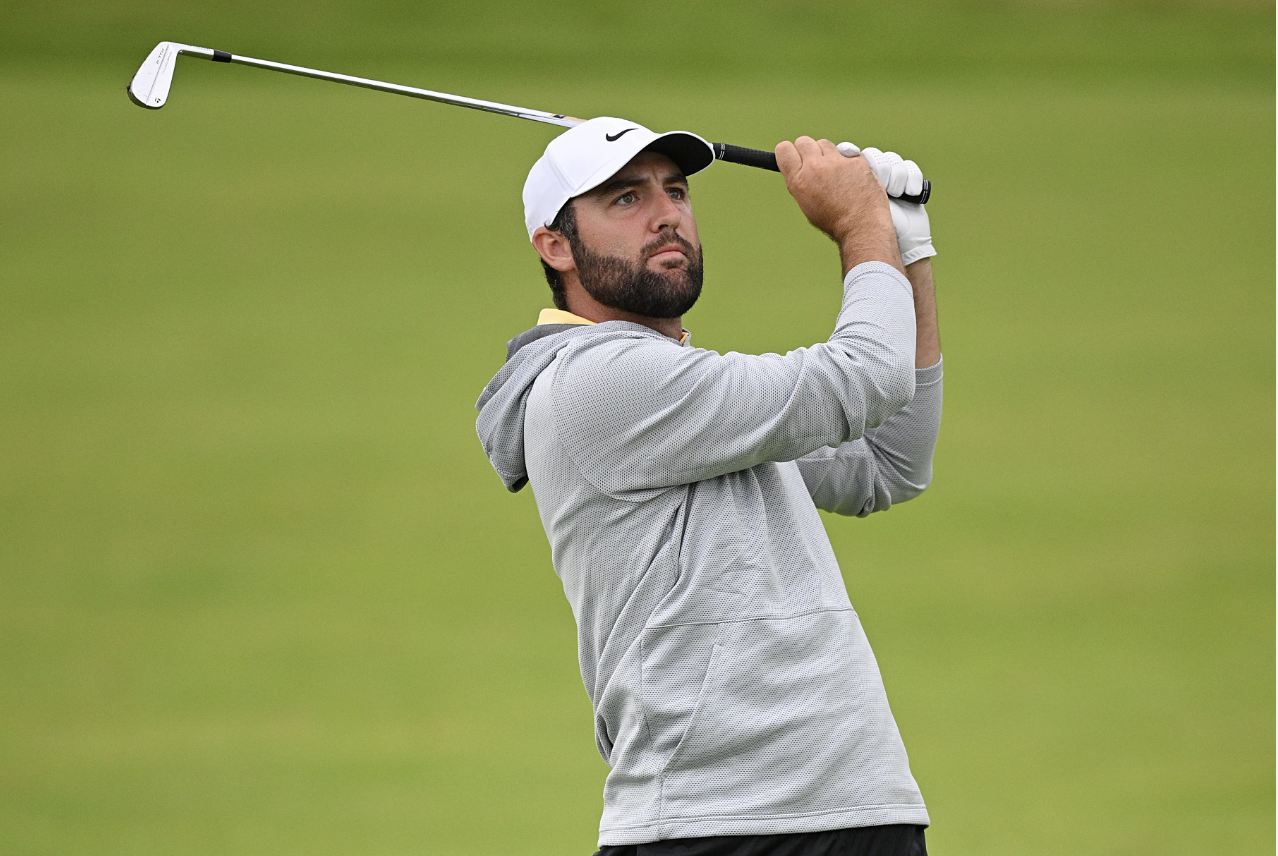
Why is feel so important in the golf swing?
In golf performance science, feel is more than a poetic concept. It is a measurable phenomenon rooted in how elite athletes organize movement, perception, and attention. At the highest levels, players who cultivate feel are distinguished by a seamless integration of sensory cues, motor execution, and present-moment awareness.
No modern player exemplifies this better than Scottie Scheffler, whose mastery of feel — of the shot, the moment, and the club — is a cornerstone of his sustained dominance on the PGA Tour.
The science of feel and attentional focus
Research in motor learning consistently shows that the type of attentional focus an athlete adopts has a profound effect on performance and learning.
- External focus (the effect of the movement, like where the ball should go) outperforms internal focus on body mechanics
- External focus produces more automatic, efficient movement patterns
- Holistic focus (the overall feel of the action) further enhances performance for skilled athletes
These findings align with broader theories of embodied cognition and flow: high-level performance emerges from sensorimotor integration and context-rich perception, not from conscious analysis of mechanics. In golf specifically, elite players who use feel during the shot show lower variability in swing and shot outcomes than those relying on internal instructions.
Scottie Scheffler: a scholar of feel on the PGA Tour
While most golfers and coaches get lost in technical minutiae — body positions, grip angles, sequencing cues — Scheffler has built his game on a subtly different approach. He prioritizes the experience of the shot over the mechanics of the swing.
- He talks about playing golf, not playing the swing
- His unconventional foot slide is highly individual and instinctive — attempts to "correct" it could disrupt his feel-driven motion
- His long-time coach Randy Smith has worked with him since childhood, valuing feeling the movement as much as understanding it
This matches how sport psychology describes elite motor performers: they rarely occupy themselves with conscious swing thoughts during execution. They rely on perception-action coupling cultivated by thousands of hours of sensorimotor experience — the hallmark of flow states, where action and awareness merge.
Why feel beats technique in the moment of execution
From a performance science perspective, dwelling on internal mechanics during execution can actually degrade performance. The constrained action hypothesis says that focusing on bodily mechanics interferes with the automatic organization of well-learned movements.
For a player like Scheffler, feel is not a denial of technique — it is technique embodied. Instead of thinking about hinge angles or swing plane, he feels:
- The clubface square to the target
- The weight distribution through transition
- The tempo that matches his internal rhythm
These sensory perceptions guide his motor output in real time, supporting consistent execution under pressure.
Train feel and presence with our coaches in Austin.
Learn More →Presence, flow, and the competitive edge
Scheffler's repeated success — from major wins to extended time at world No. 1 — is not just physical skill. It is psychological presence. He embodies what Csíkszentmihályi described as flow: a state where action feels effortless, awareness and execution merge, and performance happens without conscious interference.
Key takeaways for golfers
- Train feel, not thoughts: external and holistic focus outperform internal cues
- Develop presence: flow states support seamless execution by merging action and awareness
- Trust sensorimotor experience: rely on accumulated sensory feedback rather than conscious mid-shot adjustments
True mastery of feel is not about thinking less. It is about thinking with the body, letting sensory perception and practiced movement guide performance in the moment.
Frequently Asked Questions
What is "feel" in the golf swing?
Feel is the integration of sensory perception (clubface, weight, tempo) with motor execution. It is built through thousands of repetitions and feedback, and lets elite players guide the swing in real time without conscious mechanical thoughts.
Is external focus better than internal focus in golf?
Yes. Motor learning research consistently shows that an external focus (the effect of the movement, such as ball flight or target) produces better performance and learning than an internal focus on body mechanics, especially for skilled athletes.
How does Scottie Scheffler think during a shot?
Scheffler is known for playing the shot, not the swing. He focuses on outcome, rhythm, and feel rather than mid-swing technical cues, which aligns with the perception-action coupling and flow states observed in elite performers across sports.
Can amateur golfers train feel like a tour player?
Yes, with the right structure. Use external and holistic focus cues, build pre-shot routines that emphasize target and rhythm, and use launch monitor and video feedback in practice — not during the shot — to refine feel without overloading conscious thought.