Lead Leg Force at P5: Why It Preserves Spine Angle and Improves Strike
What is happening at P5 in the golf swing?
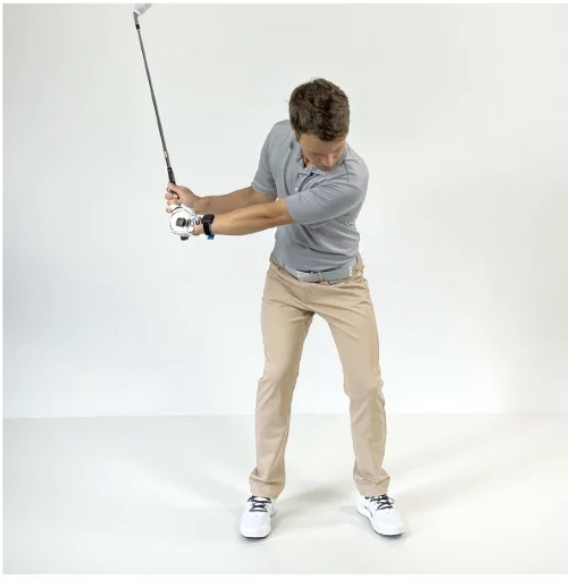
P5 is the moment in the early downswing when the lead arm reaches parallel to the ground. It is one of the most diagnostic points in the swing because what the lead leg does here largely decides what happens at impact.
Why lead leg force at P5 matters
Spine angle preservation is not a posture you hold. It is a byproduct of how the ground is being pushed. At P5, elite players are already sending vertical force through the lead leg into the ground.
- Creates upward force that resists collapse
- Allows the pelvis to rotate without losing height
- Keeps the chest over the ball longer
- Promotes compression and downward strike
What happens when lead leg force is missing
Without strong vertical force in the lead leg at P5, the body looks for stability somewhere else. The most common compensation is early extension.
- Pelvis pushes toward the ball
- Spine angle stands up
- Hands get crowded, leading to flips and blocks
- Strike quality drops
See your force plate and 3D motion data in an Austin swing analysis.
Learn More →How to train better lead leg loading
- Use force plates or pressure mats to measure vertical force at P5
- Train hip hinge and posting drills with resistance
- Build glute and quad strength so the lead leg can accept force
- Use external focus cues like "push the ground away" rather than "keep your spine angle"
Frequently Asked Questions
What is P5 in the golf swing?
P5 is the position in the early downswing where the lead arm is parallel to the ground. It is a key checkpoint for evaluating how the lower body is sequencing into impact, especially how the lead leg is loading the ground.
How does lead leg force prevent early extension?
Vertical force through the lead leg at P5 creates upward push that lets the pelvis rotate and clear without standing up. When that force is missing, the body compensates by pushing toward the ball, which is what early extension looks like.
Can I measure lead leg force without force plates?
You can see the symptoms on video by looking at spine angle, pelvis position, and hand path through impact. To measure actual force values you need force plates or pressure mats, which we use in our Austin swing analysis sessions.