What Really Happens When You Leave Golf Clubs in the Texas Heat
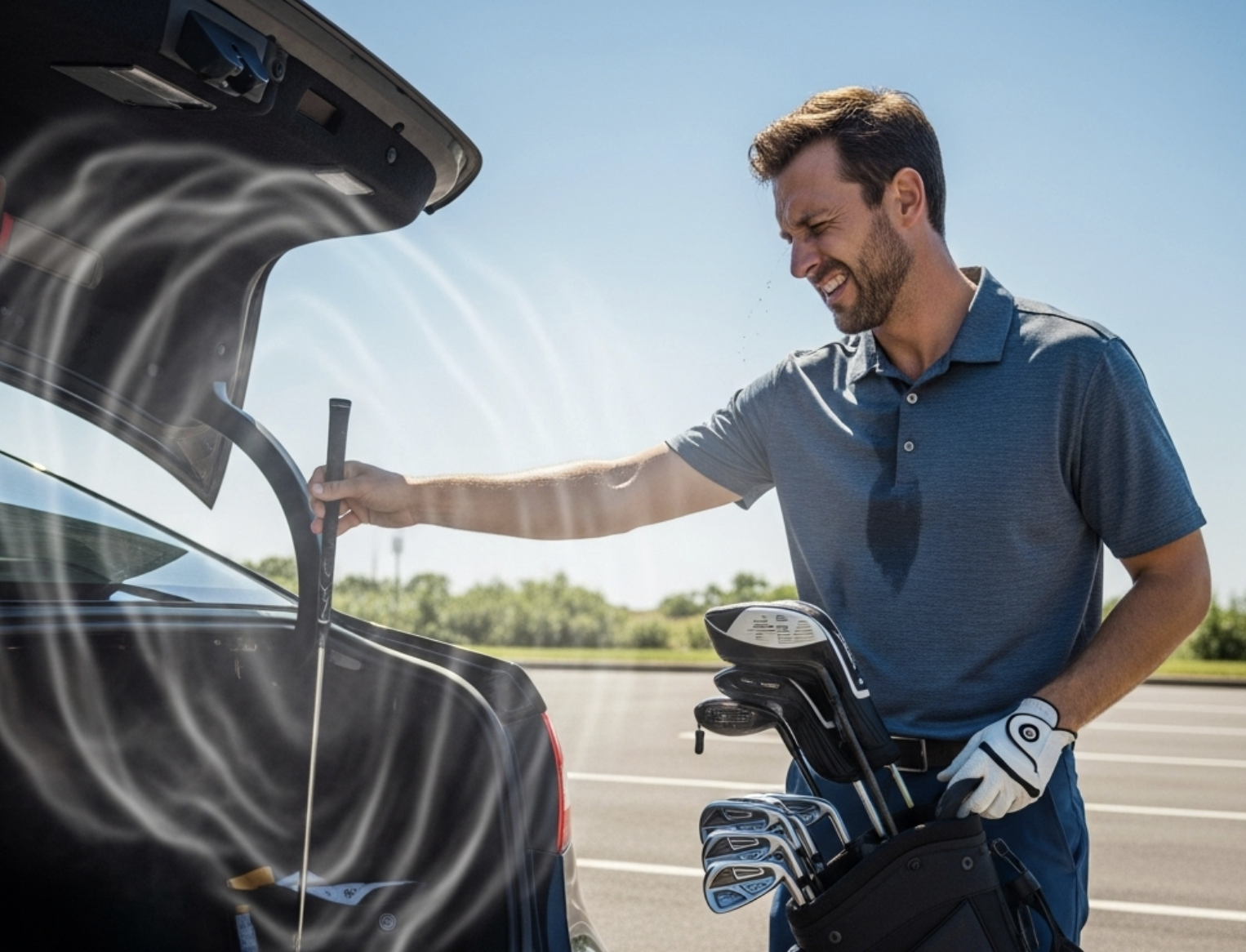
In the heart of a Texas summer, car interiors can soar past 120 degrees. For golfers in Austin, the temptation to leave your clubs in the trunk between rounds is understandable. But what are you actually doing to your gear? (One nice side effect of beginner-friendly indoor lessons at our climate-controlled studio: your clubs never bake in the parking lot.)
Golf Balls: Minimal Gains, Notable Risks
When a golf ball is exposed to high heat, the core and cover materials soften. Exposure to 115°F for just one hour can lower compression by as much as 15 points. This might result in a slightly softer feel and a negligible gain in carry distance: about one extra yard. However, prolonged exposure can degrade materials over time, particularly urethane covers.
Steel and Graphite Shafts: Mostly Stable
Steel shafts are highly resistant to heat. Graphite is more sensitive: prolonged exposure can lead to subtle softening in shaft behavior and weakened epoxy bonds at the hosel.
Grips: The Weakest Link in the Heat
High temperatures, combined with humidity and UV exposure, accelerate the breakdown of grip materials. Rubber compounds dry out, lose elasticity, and become slick or brittle. Even premium grips can lose up to 50% of their original tackiness after a few weeks in a hot trunk. Loss of grip feel impacts control, timing, and confidence.
The Bottom Line
Leaving your clubs in the car on a hot Austin day isn't likely to ruin your round tomorrow, but it will degrade your equipment over time: especially your grips. If you want consistency, control, and confidence, store your gear in a temperature-controlled space and check your grips regularly for signs of wear.
Want to make sure your equipment matches your improvement? Talk to our coaches.
Learn More →