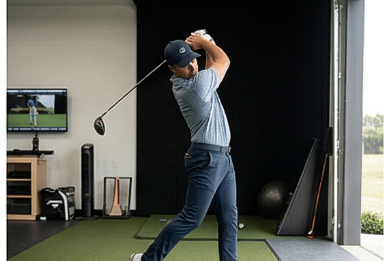
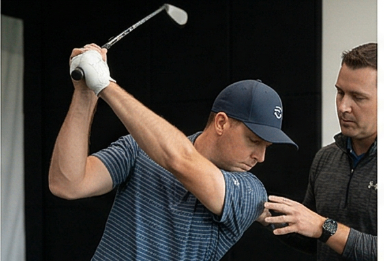
Driver Speed and Distance: 5 Hidden Keys Most Golfers Never Train

What actually drives driver distance?
Most golfers chase distance with swing thoughts and effort. The real gains come from measurable, trainable systems. Here are five hidden keys we focus on at ATX Golf Performance.
1. Ground reaction force
Speed comes from the ground first. Vertical and rotational force through the lead leg in transition is one of the largest contributors to clubhead speed in elite drivers.
2. Kinematic sequencing
Sequence beats raw effort. Pelvis, then torso, then arms, then club. When the order is right, speed compounds. When it is wrong, the body decelerates trying to save the swing.
3. Lead wrist and shaft lean
A flat or bowed lead wrist at impact stabilizes the face and lets you swing fully through. A cupped lead wrist forces compensations that limit speed and start lines.
4. Attack angle
Driver is the only club where you should be hitting up on the ball. Even a small change in attack angle can add carry distance without any extra clubhead speed.
5. Stretch reflex and elastic loading
Real speed is elastic, not muscular. Training the body to load and release like a coiled spring (not just push) is what separates 95 mph from 115 mph.
Build a measurable speed plan with launch monitor and force plate data.
Learn More →How to train these five keys
- Use launch monitor data to track clubhead speed and attack angle
- Use force plates to monitor vertical and rotational ground force
- Train sequencing with structured drills
- Use overspeed protocols to develop elastic loading
- Pair speed work with strength and mobility training
Frequently Asked Questions
How can I add 10 mph to my driver?
Adding meaningful clubhead speed comes from training the right systems: ground reaction force, kinematic sequencing, lead wrist and face stability, attack angle, and elastic loading. A measurable plan with launch monitor and force plate data is more effective than generic speed drills.
What is the best attack angle for the driver?
Most golfers benefit from a positive attack angle (hitting up on the ball) of around 2 to 5 degrees. The exact number depends on club speed, ball speed, and launch conditions. We use launch monitor data to find your individual optimum.
Does swinging harder add driver distance?
Only if your sequence and face control can keep up with the extra effort. Most golfers lose distance when they swing harder because their sequence breaks down. Training elastic loading and sequencing produces more reliable speed gains.