Practice Your Swing. Play the Game.: Why Separating Practice from Play Is the Key to Better Golf
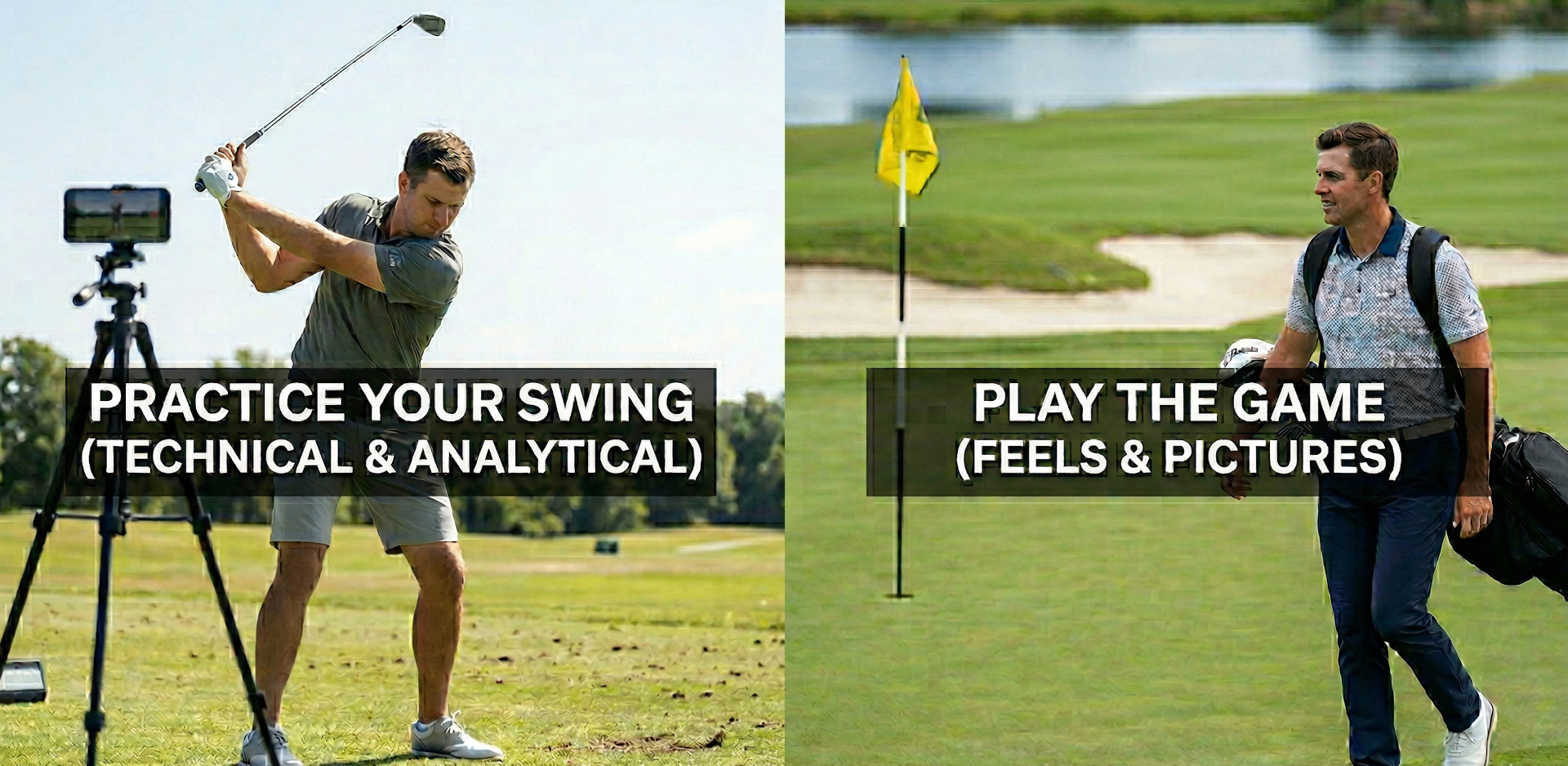
One of the biggest mistakes golfers make is blending practice mode and playing mode into one.
They are not the same thing.
Working on your swing and playing golf on the course require different mindsets, different goals, and different focus. The sooner you understand that, the sooner you can play with more freedom and get more out of your practice.
When You're Working on Your Swing
Swing work is the time to be technical.
This is where you analyse, make changes, slow things down, exaggerate feelings, and pay attention to positions. It is the place for rehearsal swings, drills, video, feedback, and correction.
You are not trying to "just play" during this phase. You are trying to improve a movement.
That means ball flight is not always the main concern. Sometimes the shot might not look great while you are changing something. That is normal. Good technical practice is often about improving the motion first, trusting that the ball flight will improve as the movement becomes more natural.
When You're Playing on the Course
The golf course is not the place for swing changes.
It is the place to play shots, pick targets, commit, react, and compete.
On the course, your job is not to fix your swing. Your job is to use the swing you brought that day and get the ball around the course as effectively as possible.
That means your attention should be on:
- The target
- The shape of shot
- The lie
- The wind
- The feel
- The commitment
Not on technical swing thoughts.
Because when you take technical thoughts onto the course, you usually get the worst of both worlds: you don't fully trust the shot, and you don't fully commit to the swing.
What the Best Players in the World Do
The best players in the world understand this separation extremely well.
After they finish a tournament on Sunday, they don't just mindlessly hit balls. On Monday, they and their coaches often look back at the week and ask two simple questions:
- What worked well?
- What needs to improve?
That is the time to analyse.
Then they dive back into technique. They may work on mechanics, movement patterns, sequencing, or clubface control. During that stage, they are less worried about perfect ball flight and more concerned with making the right changes and building the right feels.
But then something important happens.
By Tuesday or Wednesday, they begin shifting away from technique and back toward performance. They start hitting shots to targets. They focus on trajectory, shape, routine, and scoring feels. They try to get as comfortable and athletic as possible again.
They switch from training the swing to playing golf.
And when tournament time comes, they do not stand on the course trying to fix mechanics mid-round. They trust the work, see the shot, and play.
The Lesson for Every Golfer
You do not have to be a tour player to learn from that approach.
If the best players in the world separate technical work from performance, amateur golfers should too.
Too many golfers go to the range, have one swing thought that helps, and then try to carry that thought into every shot on the course. By the 5th hole, they are stuck between swinging, steering, and searching.
That is exhausting.
Instead, try this:
- When you practice, give yourself permission to be technical.
- When you play, give yourself permission to be athletic.
Practice with awareness. Play with trust.
A Simple Way to Think About It
On the range, ask: What am I working on?
On the course, ask: What shot am I trying to hit?
That one change in mindset can make a huge difference.
Final Thought
If you are always trying to fix your swing on the golf course, you are never fully playing golf.
The course is a test, not a workshop.
Do your building on the range. Do your trusting on the course.
Work on your swing with intention. Then go play the game.
Book a Game Evaluation to separate what needs fixing from what's already working : from $125
Learn More →Frequently Asked Questions
Should I think about my swing on the golf course?
No. On the course, focus on the target, shot shape, and commitment: not mechanics. Save technical work for the range.
How do tour pros separate practice from play?
After a tournament, they analyse and work on technique early in the week, then shift to performance mode: hitting targets, focusing on feel and routine: before competing again.
Why does my swing feel worse on the course than the range?
You're likely carrying technical swing thoughts onto the course, which prevents full commitment and trust. Separating practice mode from play mode solves this.